

Bio-imaging Technologies Market to Reach US$17.60B by 2031 at 15.3% CAGR Driven by Diagnostics Demand
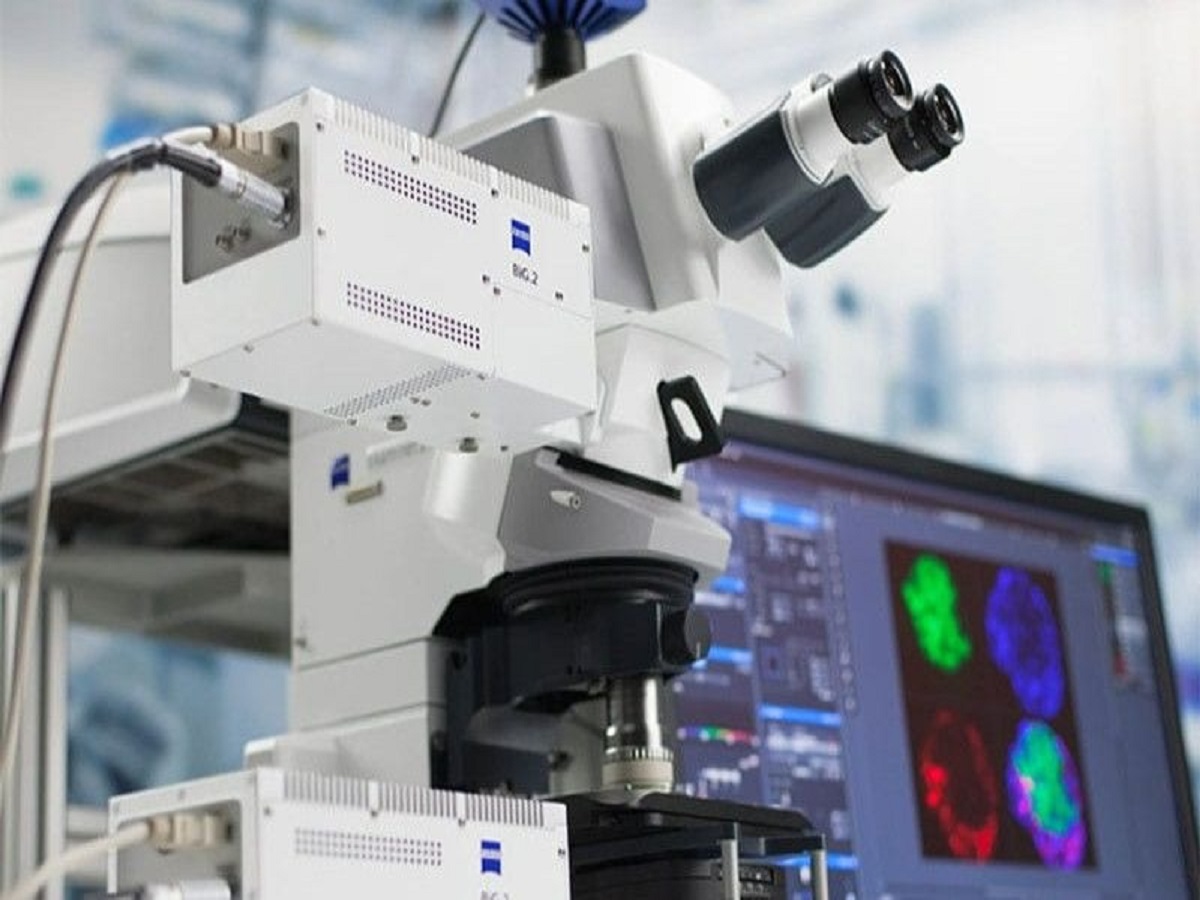
Bio-Imaging Technologies Market
Bio-imaging Technologies Market to Hit US$17.60B by 2031 at 15.3% CAGR, North America Leads 41%; Key Players GE HealthCare, Abbott
The bio-imaging technologies market is growing as demand increases for advanced imaging solutions that support precise diagnostics and biomedical research”
LEANDER, TX, UNITED STATES, December 19, 2025 /EINPresswire.com/ -- According to DataM Intelligence, the Global Bio-imaging Technologies Market reached US$ 5.94 billion in 2023 and is projected to grow substantially to US$ 17.60 billion by 2031, expanding at a strong CAGR of 15.3% during the forecast period 2024–2031. Market growth is driven by increasing demand for advanced diagnostic and research tools, rising adoption of non-invasive imaging techniques, and continuous technological advancements in life sciences and healthcare. Growing investments in biomedical research, drug discovery, and early disease detection are further accelerating market expansion.— DataM Intelligence
Bio-imaging technologies enable non-invasive visualization of biological structures and processes, allowing researchers and clinicians to study cellular and molecular activity with minimal disruption to living systems. These technologies provide high-resolution, three-dimensional data without physical interference, supporting applications in disease diagnosis, treatment monitoring, and biomedical research. The ability to capture detailed biological insights while preserving sample integrity makes bio-imaging a critical tool in modern healthcare and life science research, driving sustained global market growth.
Download your exclusive sample report today: (corporate email gets priority access): https://www.datamintelligence.com/download-sample/bio-imaging-technologies-market
Key Highlights from the Report:
The bio-imaging technologies market is growing strongly due to rising prevalence of chronic diseases and increasing demand for advanced diagnostic and research imaging solutions.
Adoption of advanced imaging modalities such as optical imaging, magnetic resonance imaging, ultrasound, radiological imaging, and nano-bio imaging is expanding application areas in healthcare and life sciences.
Continuous technological advancements, including high-resolution imaging systems and AI-assisted image analysis, are improving diagnostic accuracy and workflow efficiency.
North America holds a significant market share supported by advanced healthcare infrastructure and strong research investments, while Asia-Pacific is emerging as a high-growth region driven by healthcare modernization.
Market growth is further supported by increased research activities, product innovations, and strategic collaborations between imaging technology providers and healthcare institutions, despite challenges related to high equipment costs.
Key Segments
By Technologies Type
Radiological imaging holds a significant share as techniques such as X-ray and CT scans remain fundamental for routine diagnostics, disease detection, and clinical decision-making. Magnetic resonance imaging (MRI) continues to expand due to its superior soft-tissue contrast and widespread use in neurology, oncology, and musculoskeletal imaging. Optical imaging is gaining traction with increasing adoption in research and molecular imaging applications that require high resolution and real-time visualization. Ultrasound imaging maintains strong demand owing to its non-invasive nature, cost-effectiveness, and broad use across obstetrics, cardiology, and point-of-care diagnostics. Nano-bio imaging represents a rapidly growing segment, driven by advancements in nanotechnology that enable enhanced molecular-level visualization for early disease detection and targeted research. Other technologies, including hybrid and emerging imaging modalities, contribute to continued innovation in the bio-imaging landscape.
By Application
Medical bio-imaging dominates the market as it is extensively used for diagnosis, treatment planning, and monitoring of a wide range of diseases in clinical settings. Molecular bio-imaging is witnessing strong growth, supported by rising focus on precision medicine, early disease detection, and understanding biological processes at the cellular and molecular levels.
By End-User
Hospitals represent the largest end-user segment due to high patient volumes, availability of advanced imaging infrastructure, and increasing demand for accurate diagnostic solutions. Diagnostic centers are expanding rapidly as outpatient imaging services grow and patients seek cost-effective and timely diagnostic procedures. Other end users, including research institutes and academic laboratories, continue to contribute to market growth through ongoing innovation and translational research in bio-imaging technologies.
Buy Now & Unlock 360° Market Intelligence: https://www.datamintelligence.com/buy-now-page?report=bio-imaging-technologies-market
Key Players
GE HealthCare | Abbott Laboratories | Hitachi Medical Corporation | Bayer AG | Esaote S.p.A. | Clario | Digirad Corporation | Bracco | Shenzhen Mindray Bio-Medical Electronics Co., Ltd. | Hologic Inc. | FONAR Corporation
Key Highlights
GE HealthCare – Holds a share of 18.9%: Market leader in bio-imaging technologies with a comprehensive portfolio spanning MRI, CT, PET, ultrasound, and AI-enabled imaging platforms for clinical and research applications.
Abbott Laboratories – Holds a share of 14.7%: Strong presence in diagnostic imaging support and contrast-enabled solutions, integrated with advanced diagnostics and digital health ecosystems.
Hitachi Medical Corporation – Holds a share of 11.6%: Known for high-performance MRI and ultrasound systems emphasizing image clarity, workflow efficiency, and patient comfort.
Bayer AG – Holds a share of 9.8%: Key player in contrast media and imaging informatics, supporting enhanced visualization in radiology and molecular imaging.
Esaote S.p.A. – Holds a share of 8.4%: Specializes in dedicated MRI and ultrasound systems for musculoskeletal, cardiovascular, and specialty imaging applications.
Clario – Holds a share of 7.2%: Focuses on imaging services and bio-imaging solutions for clinical trials, supporting drug development and precision medicine.
Digirad Corporation – Holds a share of 6.1%: Provides nuclear imaging solutions and mobile diagnostic services with strength in cardiac and molecular imaging.
Bracco – Holds a share of 5.6%: Offers diagnostic imaging agents and delivery systems that enhance image quality across MRI, CT, and ultrasound modalities.
Shenzhen Mindray Bio-Medical Electronics Co., Ltd. – Holds a share of 9.1%: Expands rapidly with cost-effective imaging systems, including ultrasound and patient monitoring, with growing global adoption.
Hologic Inc. – Holds a share of 6.8%: Strong position in women’s health imaging, including breast imaging, diagnostics, and interventional solutions.
FONAR Corporation – Holds a share of 2.8%: Specializes in upright and open MRI systems, focusing on patient-centric imaging and niche clinical applications.
Regional Insights
• North America – 41% driven by "strong presence of leading healthcare and life-science research institutions, advanced imaging infrastructure, high R&D investment, and widespread adoption of cutting-edge modalities like MRI, PET, CT, and molecular imaging in clinical and research settings."
• Europe – 27% supported by "growing healthcare expenditure, robust public health systems, increasing focus on early disease diagnosis and treatment monitoring, and strong adoption of bio-imaging solutions across hospitals and diagnostic centers."
• Asia-Pacific – 23% fueled by "rapid healthcare infrastructure development, rising prevalence of chronic and infectious diseases, expanding medical research ecosystem, and increasing adoption of advanced imaging technologies in emerging markets such as China, India, and Japan."
• Latin America – 6% driven by "gradual expansion of diagnostic imaging services, growing investments in healthcare infrastructure, and increasing demand for early detection and disease monitoring technologies."
• Middle East & Africa – 3% supported by "rising healthcare modernization initiatives, expanding diagnostic facilities, and growing awareness of advanced imaging technologies for improved clinical outcomes in both public and private sectors."
Get Customization in the report as per your requirements: https://www.datamintelligence.com/customize/bio-imaging-technologies-market
Key Developments
November 2025: Leading equipment manufacturers unveiled next-generation bio-imaging systems with enhanced resolution and real-time analytics capabilities, supporting faster and more accurate diagnostics in clinical and research settings.
October 2025: Healthcare technology vendors introduced integrated imaging platforms combining AI-powered image analysis with existing bio-imaging modalities to assist clinicians in early disease detection and reduce interpretation time.
September 2025: Major research institutions began deploying hybrid imaging systems that merge functional and structural imaging techniques, improving insights into cellular processes and disease mechanisms for drug discovery and precision medicine.
August 2025: Strategic collaborations were announced between bio-imaging technology providers and pharmaceutical companies to co-develop imaging biomarkers and companion diagnostics for targeted therapies.
July 2025: Bio-imaging instrument suppliers expanded their service and support ecosystems with remote diagnostics and predictive maintenance offerings to enhance uptime and reduce operational disruptions for clinical sites.
June 2025: Advances in high-throughput imaging workflows were introduced, enabling faster data acquisition and analysis for large-scale phenotypic studies and translational research programs.
Frequently Asked Questions (FAQs):
1. How big is the global bio-imaging technologies market in terms of growth forecast?
The global bio-imaging technologies market was valued at around US$ 5.94 billion in 2023 and is expected to reach approximately US$ 17.60 billion by 2031.
2. What is the projected CAGR for the bio-imaging technologies market?
The market is projected to grow at a CAGR of about 15.3% during 2024–2031.
3. Which region currently dominates the bio-imaging technologies market?
North America dominates the market due to strong healthcare infrastructure, high adoption of advanced imaging technologies, and significant research investments.
Conclusion:
The global bio-imaging technologies market is witnessing strong growth as demand for advanced imaging solutions increases across healthcare, life sciences research, and pharmaceutical development. These technologies enable more accurate disease diagnosis, improved visualization of biological processes, and faster drug discovery, enhancing outcomes in both clinical and research settings.
Although challenges such as high equipment costs, the need for specialized expertise, and system integration issues persist, ongoing innovations in imaging resolution, software analytics, and multimodal platforms are expanding capabilities and improving accessibility. Overall, bio-imaging technologies are becoming a vital component of modern medicine and scientific research, supporting better diagnostics, effective therapies, and deeper biological insights worldwide.
Related Reports:
1. Preeclampsia Diagnostics Market
2. miRNA tools and services market
Sai Kiran
DataM Intelligence 4market Research LLP
+1 877-441-4866
email us here
Visit us on social media:
LinkedIn
YouTube
X
Legal Disclaimer:
EIN Presswire provides this news content "as is" without warranty of any kind. We do not accept any responsibility or liability for the accuracy, content, images, videos, licenses, completeness, legality, or reliability of the information contained in this article. If you have any complaints or copyright issues related to this article, kindly contact the author above.
